
Anaesthesia for oral surgery

The role of the anaesthetist
Your anaesthetist will want to know about you, your medical conditions and your previous experiences with anaesthesia. If you have a complex medical history, your anaesthetist may want to see you or talk to you before your admission to hospital. If you have any concerns regarding anaesthesia, a discussion with your anaesthetist can be arranged before you come to hospital. Your surgeon should be able to give you your anaesthetist’s contact details.
You’re in good hands
Anaesthetists in Australia are highly trained medical specialists. After graduating from medical school and completing an internship, at least five more years are spent undergoing training in anaesthesia, pain management, resuscitation and the management of medical emergencies. When you need to have oral surgery, a little preparation can help to ensure that the experience is a positive one. The aims of this pamphlet are to
- Provide you with basic information about anaesthesia for oral surgery
- Encourage you to ask questions of your anaesthetist
- Help you approach the planned procedure positively
Type of Surgery
Oral surgery involves operations within the mouth and includes the following;
- Removal of teeth. Commonly this involves the removal of impacted third molars (wisdom teeth) or deciduous (baby) teeth which have not fallen out. This surgery may be required as part of orthodontic treatment or because of crowding or repeated infections.
- Exposures of teeth which have not erupted. Teeth which have not fallen out may require surgery to remove overlying bone.
- Implant surgery. Titanium implants are used to replace missing teeth. A titanium fixture is placed in the jaw to which permanent artificial teeth are subsequently attached.
- Major jaw surgery. Orthognathic (straight jaw) surgery involves surgical realignment of the jaws, usually as part of orthodontic treatment. This surgery may involve the upper, lower or both jaws. This more complex surgery may require one or two nights in hospital and more prolonged recovery.
- Other surgery such as tongue tie and biopsies.
On the day
You will usually be advised to avoid food and fluids before your operation. If you don’t follow this rule of fasting, the operation may be postponed in the interests of your safety as food or fluid in your stomach could enter your lungs. Your surgeon, anaesthetist or the hospital will advise you how long to fast. You should take most of your regular medicines as normal (e.g. blood pressure tablets). Blood thinners and diabetic medication require special consideration and you should be given specific instructions about what to do with these medications. If you are unsure, please ask to speak to your surgeon or your anaesthetist.
What sort of anaesthesia?
Oral surgery can be performed with local anaesthesia, intravenous sedation or general anaesthesia. A local anaesthetic drug is injected at the site of the surgery to cause numbness. You will be awake but feel no pain. Local anaesthesia can be also used in conjunction with both intravenous sedation and general anaesthesia to provide post-operative pain relief. Intravenous sedation involves the injection of drugs which induce relaxation and drowsiness. This is sometimes called ‘twilight sleep’. Recall of events is possible with ‘sedation’. Most patients prefer to have little or no recall of events. Please discuss your preference with your anaesthetist.
After the surgery
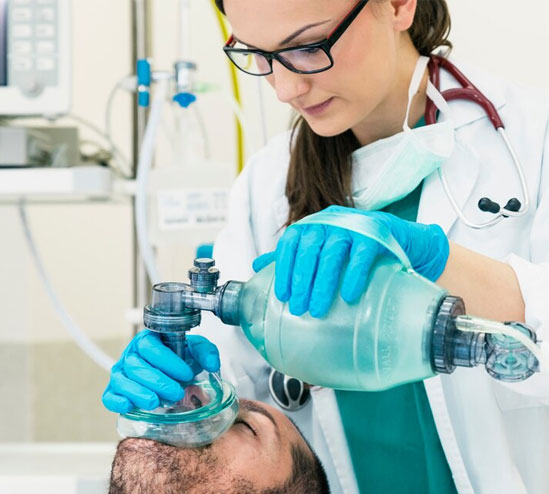
You will feel drowsy for a little while after you wake up. You may have a sore or dry throat, feel nauseous or have a headache. These are temporary and usually soon pass. To help the recovery process, you will be given oxygen to breathe, usually by a clear plastic facemask, and encouraged to take deep breaths and to cough. Only when you’re fully awake and comfortable will you be transferred either back to your room or ward. Oral surgery does not usually require strong painrelieving medicine (such as morphine) for postoperative pain relief, but they will be available should you need them.
Less strong pain relievers such as paracetamol and anti-inflammatory drugs are routinely used. And antibiotics are commonly given. Your pain relief will be discussed when you meet your anaesthetist. Nausea and vomiting are not uncommon after oral surgery. Nausea preventing drugs will likely have been given during the anaesthesia, and can be repeated after you have woken. If you have had difficulties in the past with nausea and vomiting, please let your anaesthetist know.