
Anaesthesia for Children

Optimise your position
It is common for children to reflect the parent’s emotions. Find out anything you would like to know prior to the operation. In this way you can be satisfied that you are making an informed choice in your child’s best interests.
The role of the anaesthetist
The anaesthetist will meet with you and enquire about your child’s medical and anaesthetic history. A physical examination may also be undertaken. A plan for anaesthesia will be discussed along with any queries you may have.
Sedative premedication may be given. Local anaesthetic cream or patches may be applied to numb the skin of the hands or arms. This will help if an injection is required before your child is asleep.
It is common for toddlers and older children to be accompanied to the operating theatre by a parent, who
stays until anaesthesia is induced. However, this is not always appropriate, and your anaesthetist will discuss a plan to suit the circumstances.
It is sometimes necessary to briefly restrain children to ensure safe and rapid induction of anaesthesia. Please discuss this with your anaesthetist prior to the procedure
if you have any concerns.
You’re in good hands
Anaesthetists in Australia are highly trained medical specialists. After graduating from medical school and completing an internship, at least five more years are spent undergoing training in anaesthesia, pain management, resuscitation and the management of medical emergencies. When your child needs an operation, a little preparation can help to ensure that the experience is a positive one. The aims of this pamphlet are to:
- Provide you with basic information about anaesthesia.
- Encourage you to ask questions of your child’s anaesthetist.
- Help you and your child approach the planned procedure positively.
Communicate with your child
Even young children respond well to information about surgery and anaesthesia. Provide a simple explanation of the planned procedure, preferably several days before it. Withholding this information until arrival at the hospital may not be helpful. Honesty builds trust.
On the day
Fasting prior to anaesthesia is very important. If the stomach is not empty, it is possible for vomit to come up and be inhaled, damaging the lungs. To ensure an empty stomach before the operation you will need to:
- Withhold solids and milk for six hours
- Withhold breast milk for four hours
- Withhold clear fluids for two hours
You will receive specific fasting instructions from your child’s surgeon or hospital. Special toys or comfort objects for sleeping may be brought to the hospital. It might also be helpful to bring a book or electronic device to occupy your child while waiting for the procedure. Regular medications should be given as usual with a little water.

What sort of anaesthesia?
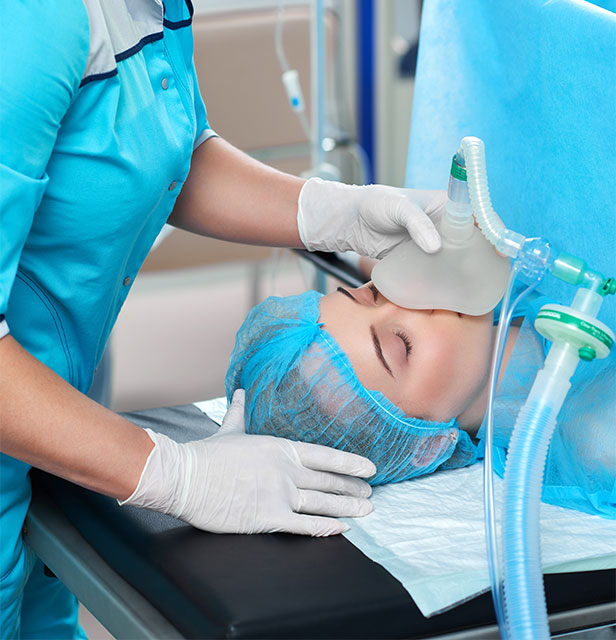
General anaesthesia is induced either by the inhalation of gases through a mask, or by an injection. This is at the discretion of the anaesthetist but preferences can usually be accommodated. The time taken to become unconscious is very short, usually less than a minute. During this time, it is common for children to wriggle, roll the eyes, breathe noisily or become limp. This is normal and expected. Once anaesthesia has been established, the anaesthetist will ensure continued unconsciousness by carefully giving sedatives, pain relievers and other medications. In many operations, intravenous fluid is also administered. The anaesthetist will be with your child constantly throughout the procedure. Regional anaesthesia is the use of local anaesthetic medications to prevent pain from the site of surgery being transmitted to the brain. In children, regional anaesthesia is most often used in conjunction with general anaesthesia to provide long-lasting pain relief after surgery. Local anaesthetic drugs can be injected directly adjacent to the surgical incision or deposited around the nerves that provide feeling to the body part being operated on. For example, local anaesthetic injected around nerves in the groin provides numbness of the hip and thigh. It is also possible to inject local anaesthetic around the nerves in the back (epidural anaesthesia) or directly into the spinal fluid (spinal anaesthesia).
After the operation
At the end of the operation your child will be allowed to wake up and will be taken to the recovery room where specially trained nurses monitor this process. Your child will be discharged from recovery when the staff are satisfied that this is safe, and that problems such as pain or nausea have been addressed. It is not unusual for children to be in recovery for an hour or more after major surgery.

Anaesthesia – the risks and complications
Australia is one of the safest places in the world to have an operation.
Although modern anaesthesia is safe and reliable, it is not entirely without risk. The following list of complications is not exhaustive, and your anaesthetist will be happy to answer any specific questions.
Minor complications
It is common to feel dizzy or light-headed following general anaesthesia. Children who feel this way are likely to be unsteady on their feet, so close supervision is essential until this effect has passed. Nausea and vomiting may occur, especially after certain procedures. Some patients are also predisposed to nausea following anaesthesia. Effective medications are used for this problem and it is generally short-lived. A sore throat is sometimes caused by the breathing tube used to maintain the airway during general anaesthesia. This settles within a day or two. Agitation or delirium is sometimes observed in children waking up from general anaesthesia. It is especially prevalent in toddlers and pre-school age children. The anaesthetist and recovery staff will provide close supervision until this has passed and may administer medication to reduce it. Skin bruising is often seen at injection sites.

Regional anaesthesia is the use of local anaesthetic medications to prevent pain from the site of surgery being transmitted to the brain.
Allergic reactions to medications including antibiotics can be very serious. It is therefore important to inform your anaesthetist of any known allergies.

Major complications
Airway and breathing problems, such as coughing, wheezing and obstruction of the airway are possible, especially in children with asthma or chest infection. These problems, though serious, usually resolve quickly and do not require further treatment. However, severe airway complications may lead to unexpected hospital admission. Allergic reactions to medications including antibiotics can be very serious. It is therefore important to inform your anaesthetist of any known allergies. Inhalation of vomit is a rare but very serious complication of general anaesthesia. Children having emergency surgery are at greatest risk, as the stomach may not be empty. Regional anaesthesia can lead to nerve damage. In most cases this manifests as a temporary numbness, but permanent weakness of the affected area has been reported.
Further information
If you require further information please contact your anaesthetist. If you don’t know your anaesthetist’s name, contact your surgeon or procedural specialist. More information about anaesthesia and anaesthetists can be found in the patients’ section on the ASA website: www.asa.org.au